Mission Facts
Objectives:
- Understand how atmospheric gravity waves (AGWs) vary in space and time
- Study how AGWs are formed and transported
- Understand how AGWs affect space weather
Launch: November 9, 2023
Type: Experiment
Our Contributions
SDL provided the following mission activities:
- Mission management
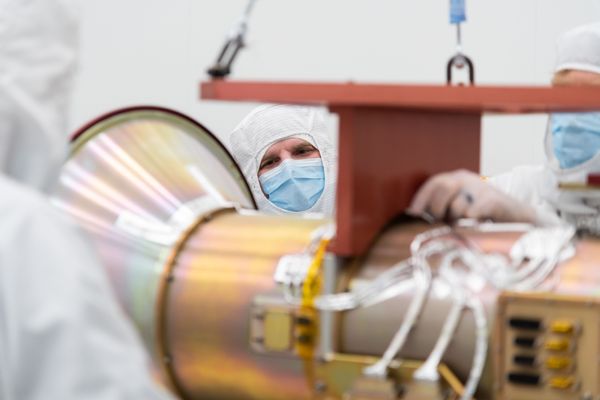
- Advanced Mesospheric Temperature Mapper (AMTM) design, build, and test
- Mission operations center direction
Observing AGWs with AWE
NASA’s AWE is providing the first global characterization of small-scale AGWs that originate in Earth’s lower atmosphere. AWE is unraveling the mystery of how AGWs affect space weather, which can disrupt navigation, tracking, and communication systems.
AGWs are invisible pulses of air mainly caused by disturbances in the troposphere, ranging from strong winds flowing over steep mountains to powerful thunderstorms, tornadoes, and hurricanes. As AGWs propagate upward, they grow rapidly in amplitude and can quickly transport energy and momentum from the troposphere into the ionosphere-thermosphere-mesosphere.
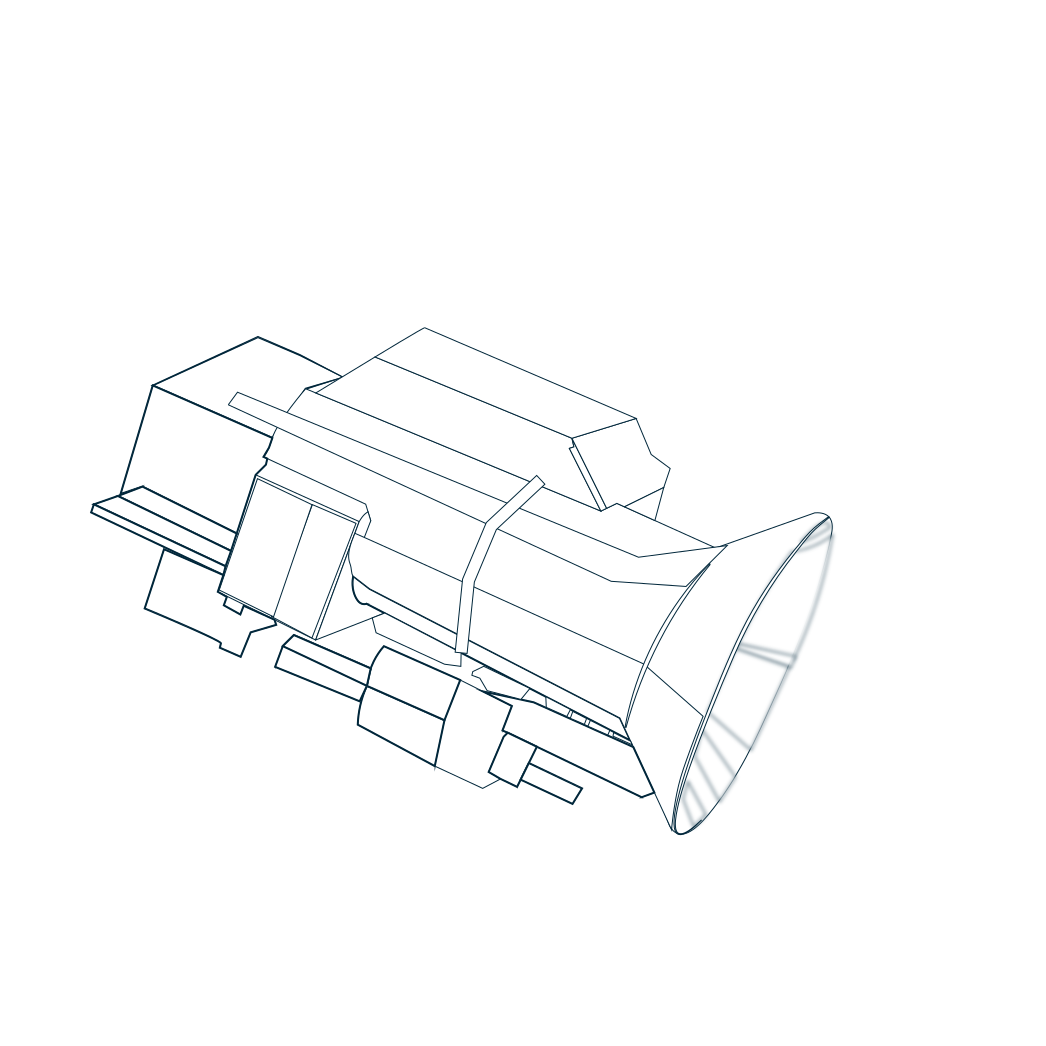
The AWE payload consists of a single instrument, the AMTM, attached to the International Space Station in a nadir-viewing configuration. The AMTM instrument is capturing wide field of view nighttime images at the rate of one image per second for two years and is producing high-quality temperature maps of AGWs near the mesopause region using well-characterized infrared emission lines of Earth’s hydroxyl (OH) airglow layer.
Reflections on the Mission